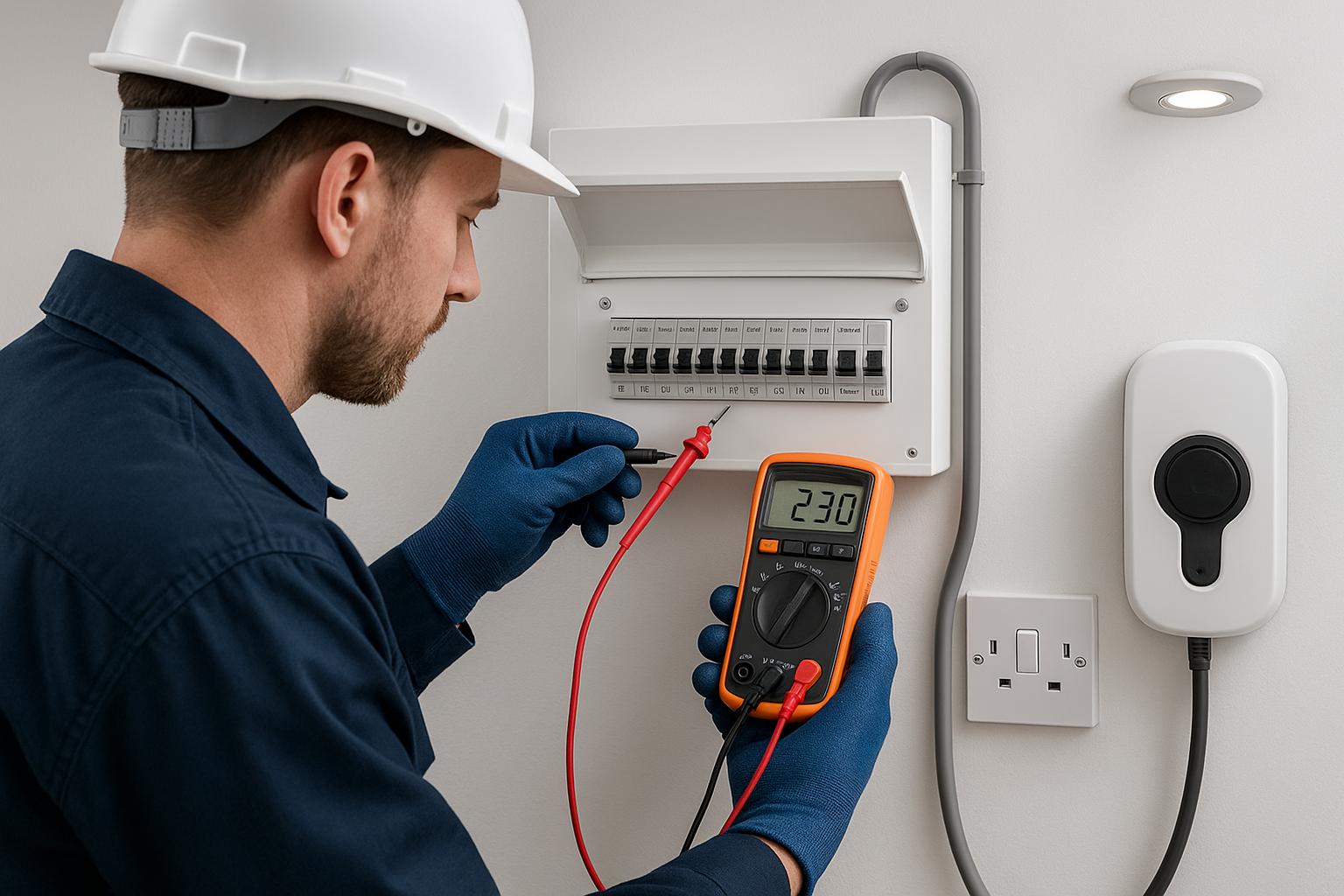
If your fuse box keeps tripping, a breaker will not reset, or you have a buzzing or hot fuse board, you need a proper fault-finding visit rather than guesswork. Afro Volt Electricians provides fuse box repair in Swiss Cottage for homes, flats, landlords, tenants and property managers, with practical testing and clear advice on whether the issue is a faulty breaker, an overloaded circuit, a damaged accessory, or a wider consumer unit problem.
We regularly help customers dealing with half the house having no power, repeated RCD trips, and older fuse wire boards that no longer suit modern appliances. In many Swiss Cottage properties, especially Victorian terraces, converted flats, older rewires and mixed-age installations, the fault is not always the fuse box itself. The problem may sit in a socket circuit, lighting circuit, appliance connection or a damp-affected outdoor fitting. That is why our approach starts with inspection and testing, then moves to repair or upgrade options that fit the property and the fault.
For urgent help, call 020 3670 4254 or email info@swiss-cottage-electricians.co.uk. We work from Hornby Cl, London NW3 3JL and cover Swiss Cottage and nearby areas including Hampstead, Belsize Park, St John's Wood, Finchley Road and Kilburn. Landmarks and routes we know well include Swiss Cottage Station, the O2 Centre Finchley Road, Hampstead Theatre, Primrose Hill and Finchley Road Station.
Our service is built around the problem you are seeing, not just the box on the wall. That means checking the symptoms, isolating the affected circuit, looking for signs of heat damage, loose terminations, ageing breakers, and any equipment that could be causing nuisance tripping. Where a repair is not the safest option, we will explain the case for a consumer unit upgrade or further electrical repairs in plain English.
Fuse Box Fault Finding in Swiss Cottage
Fuse box fault finding in Swiss Cottage starts with understanding what has changed. If a circuit has begun to trip after years of normal use, there is usually a cause. Common triggers include a faulty appliance, damaged cable, water ingress, loose connections, an overloaded ring final circuit, or a breaker that has reached the end of its reliable service life. In older homes around Swiss Cottage, we also see issues linked to ageing fuse boards, previous alterations, and mixed wiring standards from different periods.
During a fault-finding visit, we look at the consumer unit or fuse board, identify which circuit is affected, and use electrical testing to narrow down the source of the fault. That may include checking continuity, insulation resistance, polarity, earth fault paths and the condition of visible accessories. If the issue is localised to a socket, light fitting, extractor, cooker connection or outdoor circuit, we can advise on the right electrical repairs without disturbing parts of the installation that are working correctly.
Customers often contact us after a power cut in part of the property, after a new appliance has been installed, or after a circuit starts tripping at random. In flats near Finchley Road and larger homes near Primrose Hill, we also see fault patterns caused by multiple high-load appliances running on older circuits at the same time. The right remedy may be a repair, a breaker replacement, or an upgrade to the consumer unit if the board is no longer giving dependable protection.
If you are unsure whether the problem is urgent, switch off affected appliances, keep clear of any burning smell, heat, discoloration or buzzing, and arrange a qualified electrician to investigate. Do not keep resetting a breaker that trips repeatedly without identifying the cause, as that can make the fault worse.
Tripping Breaker Investigation in Swiss Cottage
Tripping breaker investigation in Swiss Cottage is one of the most common reasons people call us. A breaker that trips is doing its job by disconnecting power when it detects an overload or fault. The challenge is finding out whether the cause is temporary, equipment-related, or a sign of a deeper wiring issue. Simply replacing the breaker without checking the circuit can leave the real fault in place.
We investigate breaker trips by checking what was in use when the fault occurred, whether the trip happens immediately or after a delay, and whether the same circuit has a pattern of failure. For example, a kitchen circuit may trip when a kettle, toaster, microwave and dishwasher are used together. A lighting circuit may trip because of a failed fitting, a damaged switch line or moisture in an external light. In some older properties, a breaker may trip because the circuit is being asked to carry more demand than it was ever designed for.
Recent work in the local area shows the kind of issues we deal with every day. In St John's Wood, we carried out a kitchen wiring inspection after nuisance tripping and highlighted the repairs needed before further appliance use. In Finchley Road, we helped a customer with a replacement light fitting, checked the switch line and left the room ready for normal use. In Kilburn, we traced an intermittent lighting fault, checked switches and fittings, and restored safe use of the affected rooms. These are the kinds of real-world problems that often sit behind a breaker trip.
Once the fault is identified, we can discuss the next step. That may be a targeted repair, replacement of a damaged accessory, separation of overloaded equipment, or a wider consumer unit work recommendation if the board is not providing dependable protection for the property.
RCD Nuisance Tripping in Swiss Cottage
RCD nuisance tripping in Swiss Cottage is often reported when power cuts out unexpectedly and the reset button will not stay in. An RCD is designed to disconnect quickly when it detects an imbalance that may indicate a fault to earth. That protection is important, but repeated unwanted tripping usually means something on the circuit needs attention.
Common causes include moisture in outdoor equipment, a failing appliance, damaged cables, accumulated wear in sockets or switches, and faults in lighting circuits, extractor fans or immersion-related equipment. In homes with older rewires, converted flats and mixed-age installations, nuisance tripping can also happen when modern electrical loads are added to circuits that were not designed for today’s usage.
Our approach is to test the circuit methodically and look for the actual cause rather than masking the symptom. That can involve checking appliances one by one, reviewing the affected socket or lighting circuit, and inspecting any visible signs of heat, corrosion or mechanical damage. If the RCD itself is old, damaged or unsuitable for the installation, we can advise on replacement as part of a consumer unit repair or upgrade plan.
For landlords and property managers, repeated RCD trips can create tenant complaints, loss of usable space and concerns about safety. For homeowners, it may mean food spoilage, lighting outages or an unusable boiler or kitchen appliance circuit. Whatever the property type, the safest step is to isolate the affected equipment, avoid using damaged outlets, and arrange a proper electrical diagnosis.
Faulty Breaker Replacement in Swiss Cottage
Faulty breaker replacement in Swiss Cottage may be the right solution when the testing shows the breaker itself is not performing correctly. Breakers can wear, become mechanically unreliable, or show signs of heat damage and poor connection. However, a replacement should only follow fault-finding, because a new breaker will not solve a wiring fault, overload or failing appliance.
We assess the condition of the breaker, the surrounding terminals, the consumer unit enclosure and the circuit it protects. If we find evidence of overheating, discolouration, looseness or repeated failure, we will explain whether replacement is suitable or whether the consumer unit needs more extensive work. In some older fuse boards, especially those still using fuse wire or outdated protection arrangements, a direct breaker replacement may not be the best long-term answer. A modern consumer unit may offer a safer and more practical solution.
Replacement work may also be linked to other services such as electrical repairs, socket installation, lighting installation or domestic electrician support. For example, a breaker may keep tripping because a socket circuit has been overloaded by a high-demand appliance arrangement. In that case, the breaker is only part of the story, and the circuit layout may need review.
If your breaker will not reset, do not force it. Turn off connected appliances, keep the area clear, and arrange an electrician to inspect the board and the affected circuit. If the fault is on a circuit supplying critical equipment, let us know when you call so we can prioritise the visit appropriately.
Fuse Board Safety Checks in Swiss Cottage
Fuse board safety checks in Swiss Cottage help identify whether a consumer unit or older fuse board is still suitable for the property. Safety checks are especially useful in Victorian terraces, converted flats, older rewires, modern flats and mixed-use buildings where different parts of the electrical installation may have been changed at different times.
We check for signs of wear, overheating, damaged covers, poor cable entry, loose terminals, missing labels, unsuitable protective devices and signs that the board is struggling with the demands of the property. In shops and offices around Finchley Road and nearby commercial premises, we also look at whether the distribution setup is coping with lighting, small power and equipment loads without repeated interruptions.
A safety check is often a sensible starting point before renovation, tenancy changeover, appliance upgrades or a consumer unit work decision. It can also support landlords and property managers who need a clear understanding of the installation condition before further work is planned. If we find issues that need further attention, we will explain the practical options, which may include repair, circuit testing, remedial work or a full consumer unit replacement where appropriate.
Because electrical work can affect safety and compliance, some jobs may be notifiable under Part P of the Building Regulations depending on the scope and location of the work. If you are planning upgrades, it is sensible to ask for current scheme registration and insurance details before booking any electrical work.
Afro Volt Electricians offers related support for electrician callouts, emergency electrician assistance, electrical repairs, consumer unit work, lighting installation, socket installation, electrical fault finding and domestic electrician services. That means we can often help when the fuse box fault is only one part of a wider electrical problem.
We provide local help across Swiss Cottage and nearby locations including Hampstead, Belsize Park, St John's Wood, Finchley Road and Kilburn. If you are near Swiss Cottage Station, the O2 Centre Finchley Road, Hampstead Theatre, Primrose Hill or Finchley Road Station, we can arrange a visit and talk through the fault, the likely cause and the safest next step.
Call 020 3670 4254 for fuse box repair Swiss Cottage, or email info@swiss-cottage-electricians.co.uk to request a visit today.