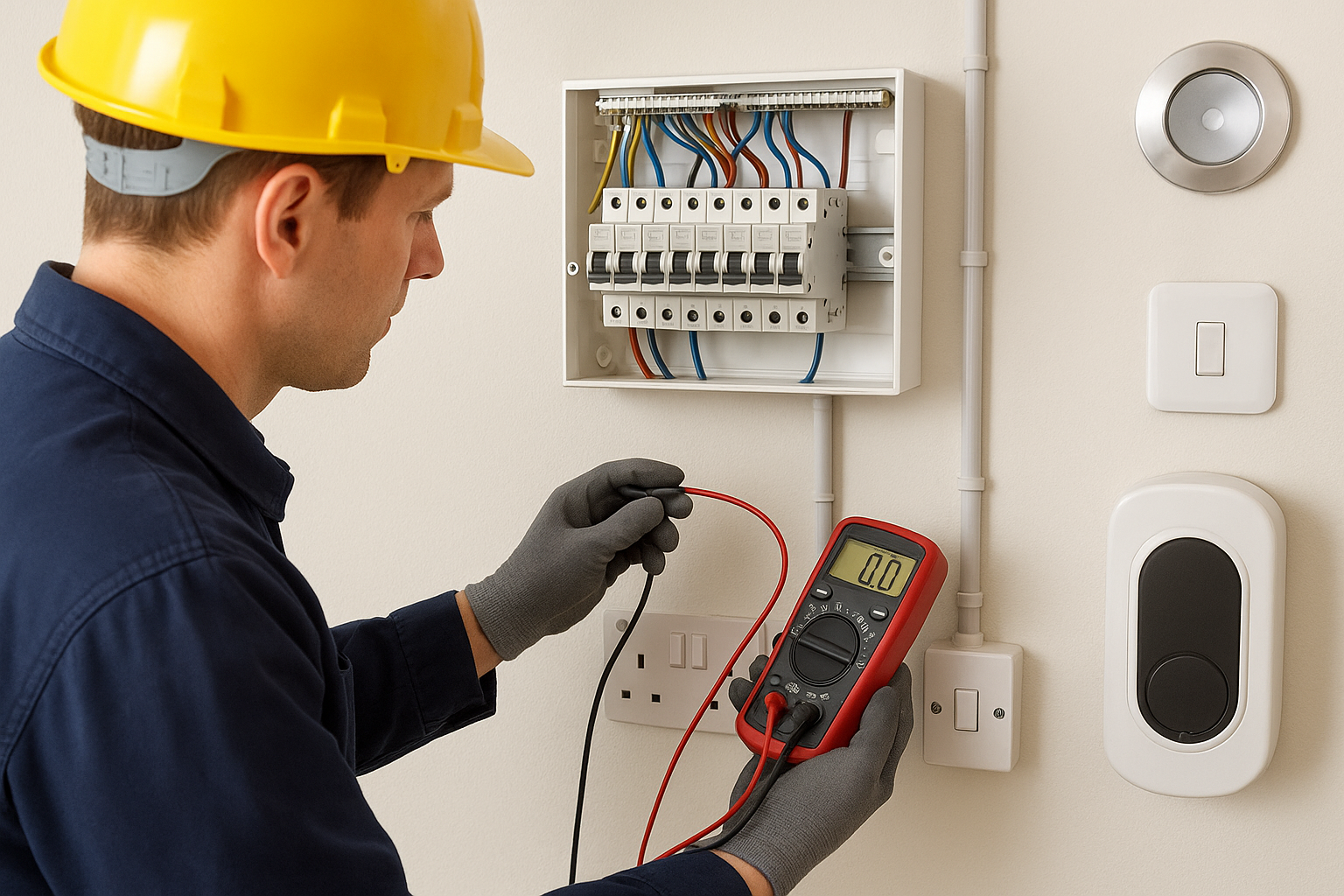
If you need electrical installations in Swiss Cottage, the first question is usually not “what is the cheapest option?” but “what is safe, suitable, and properly sized for the property and the appliances I actually use?” That is especially important in local homes and buildings where older wiring, added-on circuits, and changing room layouts can make the installation problem more complicated than it first appears.
Afro Volt Electricians provides electrical installation work from Hornby Cl, London NW3 3JL, United Kingdom, serving Swiss Cottage and nearby areas including Hampstead, Belsize Park, St John’s Wood, Finchley Road and Kilburn. We work across domestic and commercial settings, helping homeowners, landlords, builders and property managers with new circuits, appliance supplies, lighting-related installation work, and fault-led upgrades where the existing system is no longer coping.
Common reasons people ask for electrical installations in Swiss Cottage include not enough sockets, a new appliance that needs its own circuit, garden office power, extension first fix work, and older installations that need upgrading. In older Victorian terraces, converted flats and ageing maisonettes, we often find signs that the installation has been added to over time rather than planned as a whole. In modern flats and shop premises, the issue is more often circuit capacity, layout changes, or the need to bring in new equipment without overloading existing wiring.
We also see fault-and-prevention issues that sit behind installation requests. A circuit may trip when a cooker is used alongside other kitchen appliances. A shower circuit may show signs of strain if the cable, protective device or connection points are no longer in good condition. Damp can affect outdoor supplies, garden fittings and outbuilding cabling. Ageing cable can show heat damage, brittle insulation or intermittent faults. If you notice burning smells, discoloured accessories, crackling, repeated tripping, buzzing, or lights that flicker when appliances start up, switch off the affected circuit at the consumer unit where it is safe to do so and arrange a qualified electrician to inspect it.
For urgent electrical concerns, call 020 3670 4254 or request a visit today.
Our approach is practical and safety-led. We look at the property type, the likely load on the circuit, the condition of the existing equipment, access to the route, and whether the work is part of a wider upgrade or repair. That matters in Swiss Cottage, where you may be dealing with a mix of flats near Swiss Cottage Station, homes around Finchley Road Station, properties close to the O2 Centre Finchley Road, and buildings within reach of Hampstead Theatre or Primrose Hill. Each setting brings different access, routing and usage challenges.
Electrical installation work may be notifiable under Part P of the Building Regulations depending on the scope. Customers should ask for current scheme registration and insurance details before electrical work is booked, and should expect proper testing, safe isolation, and appropriate certification where required.
We do not advise DIY wiring. If you suspect a fault, keep clear of damaged accessories, do not keep resetting a tripping circuit without understanding the cause, and avoid using affected sockets or fittings until the problem has been checked.
New Circuit Installation in Swiss Cottage
New circuit installation is often the right answer when the existing wiring is already carrying too much, when a new appliance needs dedicated supply, or when a room layout has changed enough that extension leads and overloaded sockets are no longer sensible. In Swiss Cottage, we are commonly asked to add circuits for kitchens, utility areas, home offices, garden buildings, and upgraded lighting or power in converted flats and older homes.
Before installing a new circuit, we look at the consumer unit, the available capacity, the condition of the existing cabling, and the route from source to outlet. We also check whether the new load is likely to be continuous or occasional. A circuit that only powers a small office printer is very different from one feeding a fridge-freezer, dishwasher, microwave, and kettle in a busy kitchen.
Symptoms that a new circuit may be needed include sockets running out in one room, plug-in adaptors being used repeatedly, nuisance tripping when several appliances are on at the same time, or visible ageing around existing accessories. In older properties, we also find legacy wiring that was not designed for modern demand. That can be especially relevant in Victorian terraces, older rewires, and flats that have been altered several times over the years.
Our installation process is based on safe inspection and testing rather than assumption. We assess the existing circuit arrangement, identify the equipment involved, plan the new route, and make sure the protective device and cable size are appropriate for the intended use. Where access is tight, we factor that in early so that the customer knows what is involved before work begins. Builders and property managers often need this kind of planning because the electrical route can affect plastering, joinery, flooring and final fix schedules.
If you are planning a refurbishment, extension or room conversion, it is sensible to think about the circuit design before decorative work is complete. That makes it easier to avoid unnecessary rework and helps ensure the final installation matches the way the property will actually be used.
Cooker and Shower Circuits in Swiss Cottage
Cooker and shower circuits are two of the most common dedicated installation requests because both place a high demand on the electrical system. A cooker circuit needs to cope with cooking equipment that may draw significant current over a sustained period. A shower circuit must be suitable for the unit installed, the cable route, the protective device, and the local condition of the wiring and connections.
In Swiss Cottage homes, especially where kitchens have been extended, modernised, or fitted with multiple appliances, we often find that the existing supply is stretched. Signs can include tripping when the oven and hob are used together, sockets warming up, or lights dimming when heavier appliances start. That does not always mean the appliance is faulty; sometimes the circuit is simply not sized or arranged for the load it is being asked to carry.
For shower circuits, urgency is important. If the shower cuts out, trips the board, causes a burning smell, or works intermittently, stop using it and have it checked. Moisture, age, heat and repeated loading can all contribute to deterioration. In bathrooms and adjacent service areas, we pay close attention to cable condition, protective devices, switchgear and the overall installation environment.
We do not provide DIY guidance for high-load circuits. These are areas where correct design, safe isolation and testing matter. If a cooker or shower circuit is being added or replaced, the work may need certification and may be notifiable depending on the scope. That is why it is worth having the installation planned around the actual equipment, not just the room name.
For landlords and property managers, cooker and shower circuits also need to be considered in relation to tenant use, maintenance access and fault reporting. A circuit that is barely adequate on paper may become unreliable in day-to-day use if appliances are replaced with higher-demand models.
Garden and Outbuilding Supplies in Swiss Cottage
Garden and outbuilding supplies are increasingly requested in Swiss Cottage because many properties now use external buildings as offices, studios, storage rooms or utility spaces. That creates a practical need for safe, weather-aware electrical supply that can handle the intended use without relying on unsafe extension leads or temporary arrangements.
We regularly deal with garden office power, shed and outbuilding feeds, external sockets, and lighting or data-related supply for detached or semi-detached spaces. In these jobs, the condition of the route and the environment matter as much as the equipment itself. Damp, buried cable runs, external fittings, and older outbuilding wiring all need careful attention.
Warning signs include outdoor sockets that trip after rain, fittings that show corrosion, lights that fail intermittently, or a building that only has power through a trailing lead from the main house. If there is any evidence of water ingress, keep clear of the affected point and do not use it until it has been inspected. Damp can damage accessories and cable terminations, and outdoor faults can become recurring problems if the root cause is not identified.
For garden offices and outbuildings, we consider what the space is for. A simple storage shed has very different needs from a heated office with computers, screens, printers, Wi-Fi equipment and lighting. The installation should reflect the load, the distance from the main supply, and how the space will be used in winter as well as summer.
Access notes also matter here. Some properties around Swiss Cottage have narrow side returns, shared access paths, basement levels or limited rear access. We take this into account when planning the route and equipment position so that the work is realistic, tidy and safe to maintain later.
Extension and Loft Conversion Electrics in Swiss Cottage
Extension and loft conversion electrics often start as a first-fix request but quickly become a wider installation conversation. Builders and homeowners need the wiring plan to fit the room layout, insulation depth, ceiling voids, lighting positions, socket locations and any specialist equipment that will be fitted later.
In Swiss Cottage, this is especially relevant in older homes where extensions are being added to Victorian terraces, or where lofts are being turned into bedrooms, offices or bathrooms. These projects often reveal older wiring that does not match the planned layout, or existing circuits that cannot sensibly support the new spaces without alteration.
Typical installation needs include new lighting circuits, additional socket circuits, smoke alarm interconnection where relevant, and supplies for fixed equipment or data points. If the project involves a new bathroom, kitchen, or significant alteration to the electrical layout, the work must be planned carefully and may require certification or notification depending on the scope.
Symptoms that the existing system is not ready for the conversion include repeated tripping, lack of spare capacity in the consumer unit, brittle or ageing cable, and difficult access to the existing routes. In some older flats and converted buildings, the most time-consuming issue is not the visible fitting but the hidden route through floors, walls and joists.
We work with the reality of the building, not an idealised drawing. That means checking how the installation can be accessed, where the cable can be routed safely, and what the likely impact will be on plastering, decorating and final completion. For property managers and builders, that practical approach helps reduce delays and avoids surprises later in the job.
Data, TV and Doorbell Wiring in Swiss Cottage
Data, TV and doorbell wiring is often requested alongside power upgrades because modern homes and workspaces rely on connected devices just as much as sockets and lights. In Swiss Cottage, this can include a home office near Finchley Road, a converted flat close to Swiss Cottage Station, or a family home that needs a better door entry setup and more reliable media points.
We install and arrange wiring for data points, TV outlets and doorbell systems as part of a wider electrical installation or property upgrade. The aim is to keep the layout sensible, reduce cable clutter, and make the system easier to use and maintain. Where possible, the route should be planned before finishes are complete, especially in extensions, loft conversions and refurbishments.
Problems that often trigger this work include poor Wi-Fi coverage in an outbuilding, a TV location that no longer matches the room layout, a doorbell that is unreliable or badly positioned, or a home office that needs a more stable wired connection. In some cases, the issue is not the device itself but the condition or route of the existing cabling.
We also see damage caused by age, movement or previous alterations, especially where cabling has been hidden behind later decoration or furniture changes. If a doorbell fails intermittently or a TV/data point only works when touched or moved, that is a sign the connection should be checked rather than ignored.
For landlords, clear wiring and sensible positioning can reduce callouts and improve the usability of the property. For homeowners, it can make daily life easier and avoid the common problem of trailing leads and overloaded sockets in living rooms and studies.
Our recent local work includes a kitchen wiring inspection in St John’s Wood after nuisance tripping and a review of the electrical points before further appliance use, a replacement light fitting support job in Finchley Road where we checked the switch line and left the room ready for normal use, and a lighting fault repair in Kilburn where we traced an intermittent fault, checked switches and fittings, and restored safe use of the affected rooms. Those jobs reflect the kind of fault-led installation and repair work we regularly handle across the area.
Afro Volt Electricians is available 24 hours for electrical installation enquiries and urgent fault-related checks. If you need electrical installations Swiss Cottage homeowners, landlords and property managers can discuss with a local team, call 020 3670 4254 or email info@swiss-cottage-electricians.co.uk. You can also request a visit from our Swiss Cottage area service base at Hornby Cl, London NW3 3JL, United Kingdom.
Whether the job is a new circuit installation, cooker and shower circuits, garden and outbuilding supplies, extension and loft conversion electrics, or data, TV and doorbell wiring, the right answer starts with a safe assessment of the property, the load, and the access. If you are seeing symptoms such as tripping, overheating, damp-related faults, ageing cable or missing socket capacity, it is better to deal with them before they become a larger repair.
Call 020 3670 4254 or request a visit today.